How Effective Is Periodontal Treatment for Advanced Gum Disease?
Advanced gum disease changes more than gums. It alters the support system that keeps teeth stable, reshapes bone, deepens pockets around roots, and often shifts the way a person chews, brushes, and even smiles. By the time someone is told they have severe periodontitis, they are usually not asking for cosmetic improvement. They want to know whether treatment can actually save their teeth, stop the damage, and make everyday life feel normal again.
The short answer is yes, periodontal treatment can be very effective for advanced gum disease, but the word effective needs context. Treatment does not rewind the mouth to a pristine state. It does not magically restore every millimeter of bone or guarantee that every loose tooth can be kept forever. What it can do, often very successfully, is stop infection, reduce inflammation, stabilize the condition, preserve many teeth that might otherwise be lost, and create a healthier environment that is maintainable over the long term.
That distinction matters. In practice, the most meaningful win is not perfection. It is control.
What “advanced gum disease” usually means in a real clinical setting
When periodontitis reaches an advanced stage, the problem extends below the gumline. Plaque and tartar are no longer just irritating the surface tissue. Bacteria have colonized the pockets between tooth and gum, the attachment fibers have been damaged, and bone loss has already occurred. Patients may notice bleeding, bad breath, gum recession, sensitivity, drifting teeth, or mobility. Some notice nothing at all until a dentist shows them the x-rays.
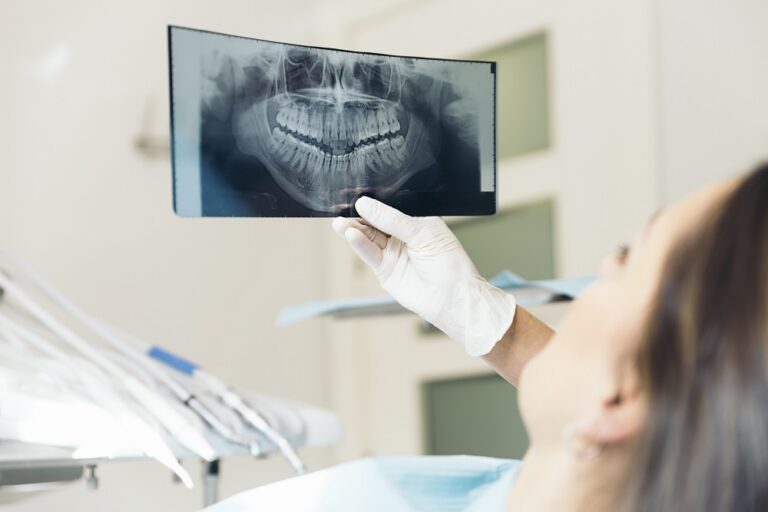
Severity is judged through several findings together, not one isolated sign. Pocket depths may measure 6 millimeters or more in multiple areas. X-rays may show moderate to severe bone loss, sometimes reaching the middle or even lower third of the root. Certain teeth, especially molars, may have furcation involvement, meaning bone loss has reached the area where roots divide. That makes cleaning and long-term maintenance much harder.
At this stage, treatment is less like a routine cleaning and more like infection control combined with structural management. The goals become very specific: reduce the bacterial load, shrink pocket depth where possible, stop further attachment loss, improve comfort and function, and decide which teeth have a reasonable long-term prognosis.
The first truth patients need to hear
Periodontal treatment works best when people understand what it is designed to do. Severe periodontitis is a chronic inflammatory disease with a bacterial trigger. That means treatment is not a one-time event. It is an active phase followed by maintenance. If the maintenance phase is neglected, even excellent treatment can unravel.
This is one of the hardest conversations in periodontal care. Patients often hope for a single deep cleaning or a surgery that “fixes everything.” Sometimes there is frustration when they learn they will need reevaluation, supportive periodontal therapy every few months, changes in home care, and ongoing monitoring for years. Yet that is exactly why many advanced cases succeed. The treatment plan acknowledges the biology of the disease instead of pretending it is a simple mechanical problem.
How effective non-surgical periodontal treatment can be
For many patients with advanced gum disease, treatment starts with scaling and root planing, often called deep cleaning. This removes calculus, bacterial biofilm, and contaminated deposits below the gumline. In some cases, local antimicrobials or systemic antibiotics are added, though not routinely for everyone. The basics still matter most: meticulous debridement, clear oral hygiene instruction, and rechecking tissues after healing.
People are sometimes surprised by how much improvement can happen without surgery. Inflamed gums often shrink once the bacterial burden drops. Bleeding decreases. Pockets that were partly deep because of swelling may https://maps.app.goo.gl/ChfJKu9PFXzaNGje8 become shallower. Tissue tone improves. Breath often gets better within days or weeks. Teeth may feel less tender to bite on because the surrounding tissues are less inflamed.
In well-selected cases, non-surgical periodontal treatment can reduce probing depths by 1 to 2 millimeters on average in moderate pockets and somewhat more in deeper sites, though results vary widely depending on anatomy, smoking status, diabetic control, and how consistently the patient cleans at home. Advanced cases rarely become perfect after this phase alone, but many become significantly more manageable.
That said, the limitations are real. Deep, narrow pockets around complex root shapes are difficult to clean thoroughly without direct access. Areas with furcation involvement, vertical bone defects, or heavy calculus on rough root surfaces may respond only partially. If reevaluation still shows persistent deep bleeding pockets, surgery is often the next logical step, not because the initial treatment failed, but because it revealed where more precise access is needed.
When surgery improves the odds
Surgical periodontal treatment is often where advanced cases gain their best shot at long-term stability. The purpose is not simply to “cut the gums open.” It is to gain visibility and access, reshape or preserve tissues where appropriate, reduce pocket depth, and in selected cases regenerate lost support.
Flap surgery allows the periodontist to reflect the gum tissue, thoroughly clean the root surfaces, remove inflamed tissue, and address bony contours that are trapping plaque. For some patients, this alone transforms a mouth with persistent 7 or 8 millimeter pockets into one that can be maintained with regular professional care and good home hygiene.
Regenerative procedures can be particularly valuable in certain advanced defects. If bone loss has created a contained vertical defect, the clinician may place bone graft materials, enamel matrix derivatives, or barrier membranes to encourage regeneration of supporting structures. These techniques are not universal solutions. They work best in very specific defect patterns and in patients who are reliable with follow-up. When the case selection is right, however, regeneration can improve attachment levels and help retain teeth that once looked questionable.
Resective surgery also has a role. In molars with furcation involvement, a clinician may sometimes reshape the area to improve cleansability, though this depends heavily on the tooth’s anatomy and strategic value. Crown lengthening, root resection, or hemisection may be considered in a narrow set of cases where saving part of a tooth is more beneficial than removing the whole thing. These are thoughtful, case-by-case decisions, not routine measures.
What success actually looks like
Patients often picture success as gums growing back to where they used to be, loose teeth becoming rock solid, and x-rays returning to normal. Sometimes there is visible improvement, but more often success is quieter and more practical.
A successful outcome usually means the infection is controlled. Bleeding is minimal or absent in most sites. Pocket depths have decreased, especially the deepest and most active ones. The patient can clean effectively at home. Tooth mobility is stable or improved. Bone levels on x-rays are not continuing to fall. Most importantly, the disease is no longer progressing at the speed it was before treatment.
That may sound modest, but clinically it is a major achievement. Advanced periodontitis can lead to tooth loss in a cascading way. Once inflammation remains uncontrolled, one tooth after another can deteriorate. Stopping that pattern is often the difference between keeping a functional dentition for many years and entering a cycle of repeated extractions and replacements.
Why some severe cases do remarkably well, and others do not
Two patients can begin with similar x-rays and receive similar treatment, yet end up with very different outcomes. That is not mysterious. Several variables strongly influence how effective Periodontal Treatment will be over time.
- smoking or nicotine use
- diabetes control
- consistency of home care
- attendance at maintenance visits
- tooth anatomy and extent of bone loss
Smoking deserves special mention because it changes the biology of healing. Smokers often bleed less than expected, which can mask inflammation, but they also tend to heal more poorly and respond less favorably to periodontal therapy. The difference is not subtle in many practices. Heavy smokers with advanced periodontitis can stabilize, but the path is steeper and the relapse risk is higher.
Diabetes is another major factor. Poor glycemic control is associated with worse periodontal inflammation and reduced healing response. On the other hand, patients with well-managed diabetes often do very well, especially when medical and dental care support each other.
Then there is home care, which sounds basic until one sees how often it determines the outcome. A patient may undergo excellent scaling, root planing, and surgery, but if plaque accumulates daily in untreated patterns, pockets reinfect. By contrast, a motivated patient with severe disease can sometimes keep compromised teeth stable for many years with disciplined brushing, interdental cleaning, and regular periodontal maintenance.
Tooth survival is a better measure than perfection
Research on periodontal therapy often looks at pocket reduction, attachment gain, and inflammation markers, but many patients care about one thing above all: will I keep my teeth? That is a reasonable standard, and the answer is often encouraging.
With appropriate treatment and maintenance, many teeth affected by advanced periodontitis remain functional for years, and often much longer. Even teeth that look poor on an initial x-ray can sometimes be retained if the infection is brought under control and the remaining support is enough to handle the biting forces placed on them. Dentists and periodontists regularly see patients who were told a decade earlier that they might lose multiple teeth, yet who still have most of them because treatment was followed by consistent maintenance.
Still, some teeth are simply beyond rescue. A tooth with severe mobility, advanced bone loss to the apex, a vertical root fracture, or an inaccessible furcation combined with recurrent infection may have a hopeless prognosis. Saving such a tooth at all costs can waste time, money, and bone that would be better preserved for a future implant or prosthetic plan. Good periodontal care includes the judgment to know when not to keep fighting for a tooth.
This is where experience matters. Aggressive treatment is not always better treatment. Sometimes the most effective path is selective preservation: save the teeth with a realistic future, remove the ones that compromise the overall plan, and build stability from there.
The role of maintenance, which is where many outcomes are won or lost
After active therapy, patients enter supportive periodontal care, often every three to four months rather than the typical six-month recall. That schedule is not arbitrary. In people with a history of advanced gum disease, harmful bacterial populations can rebound before a standard six-month interval. More frequent maintenance helps catch inflammation early, remove deposits from difficult areas, and monitor sites that may need retreatment.
At these visits, the team is not just “doing another cleaning.” They are checking pocket depths, bleeding, plaque control, mobility, recession, furcation areas, and changes in radiographs over time. That ongoing record is what tells whether the disease is truly under control.
One practical way to think about it is this: active treatment opens the door, maintenance keeps it from swinging shut again.
Can lost bone and gum tissue come back?
This is one of the most common questions after a diagnosis of severe periodontitis, and it deserves a direct answer. Sometimes, to a limited degree, yes. Often, not fully.
Bone regeneration is possible in selected defects, especially vertical defects with favorable anatomy. Certain regenerative materials and techniques can produce meaningful improvement. Soft tissue grafting can also address recession in some situations, though recession tied to advanced periodontal breakdown is often more difficult to correct than isolated cosmetic recession.
What usually does not happen is complete restoration of all tissues to their original levels. Once attachment loss has occurred, the more realistic aim is disease arrest plus strategic reconstruction where biology allows it. Patients who understand this tend to be happier with their results because they are measuring treatment against the right benchmark.
What patients usually notice after treatment
Clinical charts tell one story, but daily experience tells another. After effective periodontal treatment, patients often describe several changes that matter immediately. Their gums stop bleeding when brushing. Food does not pack as much between teeth. There is less swelling, less taste of infection, and often less self-consciousness about breath. Some notice that chewing feels steadier, especially after inflamed tissues calm down and bite adjustments are made when needed.
There are trade-offs. As inflamed gums shrink, teeth can look longer, and spaces between them may appear larger. Cold sensitivity may increase, particularly after deep cleaning or surgery, because root surfaces are more exposed. Most of the time this sensitivity settles and can be managed with desensitizing products, fluoride, or minor changes in technique. Still, patients should know this before treatment, not after.
That honesty improves trust. Advanced periodontal treatment is effective, but it is not cosmetically invisible.
Advanced gum disease and dental implants, a necessary reality check
Some patients ask whether it is better to skip periodontal treatment and remove everything for implants. That question has become more common over the years, and the answer is almost never simple.
Implants are useful, but they are not immune to the same habits and risk factors that caused periodontal disease around natural teeth. A patient with poor plaque control, untreated inflammation, smoking, or uncontrolled diabetes can also develop peri-implant disease. In other words, replacing compromised teeth with implants does not remove the need for periodontal discipline.
Whenever possible, retaining healthy or maintainable natural teeth is usually worth serious effort. Natural teeth provide proprioception, respond differently under load, and often preserve options. There are certainly cases where extraction and implant placement are appropriate, especially when prognosis is hopeless. But replacing every compromised tooth with implants is not automatically the more effective or more durable strategy.
Signs that treatment is working, and signs it is not
Most patients want to know how soon they can tell whether things are improving. There are usually clear indicators within weeks to months, though the full picture takes longer.
- bleeding decreases or stops in most areas
- pocket depths reduce at reevaluation
- gums look firmer and less swollen
- x-rays remain stable over time
- the patient can keep the mouth clean without pain or frustration
If, on the other hand, deep bleeding pockets persist, plaque control remains poor, mobility worsens, or bone loss continues on follow-up radiographs, the plan may need to change. That could mean additional non-surgical therapy, surgery, splinting, extraction of specific teeth, correction of overhanging restorations, or closer medical management of systemic risk factors.
A thoughtful reevaluation is one of the most important appointments in the whole process. It separates sites that are healing from sites that still need intervention.
The human side of advanced periodontal care
There is also a psychological component that is easy to overlook. Many people with severe gum disease feel embarrassment, guilt, or fear, especially if they have delayed treatment for years. Some have avoided care because of cost, past traumatic dental experiences, or the mistaken belief that bleeding gums are normal. Others have been told conflicting things, from “just get a cleaning” to “you’re going to lose everything.”
Good periodontal treatment meets patients where they are. It explains the findings plainly, outlines what is reversible and what is not, and stages care in a way that is medically sound and financially realistic where possible. That practical approach often improves outcomes because patients engage more consistently when they understand the purpose behind each step.
In real life, the best treatment plans are not the most elaborate. They are the ones a patient can complete and maintain.
So, how effective is periodontal treatment for advanced gum disease?
For the right patient, and with the right diagnosis, periodontal treatment is often highly effective at halting advanced gum disease and preserving function. It can reduce infection, improve comfort, save teeth, and stabilize oral health for years. Surgical therapy can further improve outcomes when non-surgical care alone cannot adequately manage deep or complex defects. Regenerative techniques can help in selected cases. Maintenance is essential, not optional.
What periodontal treatment usually cannot do is erase every sign that disease once existed. It may not rebuild all lost bone. It may not save every tooth. It may leave some recession, sensitivity, or black triangles where inflamed tissue has shrunk. Yet judged by the standards that matter most, stopping progression, maintaining teeth, protecting bone, and restoring a healthy environment, it is one of the most effective interventions dentistry offers for a chronic destructive disease.
That is the honest answer patients deserve. Advanced gum disease is serious, but it is not hopeless. With skilled care and steady follow-through, many mouths that look fragile at diagnosis become stable, comfortable, and serviceable for a very long time.
Avra Dental
Address: 1708 S Victoria Ave B, Ventura, CA 93003
Phone number: (805) 941-1001
FAQ About Periodontal Treatment
Can a dentist get rid of periodontal disease?
A dentist or gum specialist (periodontist) cannot fully cure or reverse advanced periodontal disease (periodontitis), but they can successfully stop its progression and manage the infection.
Is periodontitis very serious?
Yes, periodontitis is a very serious, advanced form of gum disease that destroys the bone and tissues supporting your teeth.
How is stage 2 periodontal disease treated?
Stage 2 periodontal disease (early to moderate periodontitis) is primarily treated with non-surgical deep cleaning procedures like scaling and root planing to remove bacteria and tartar below the gumline.